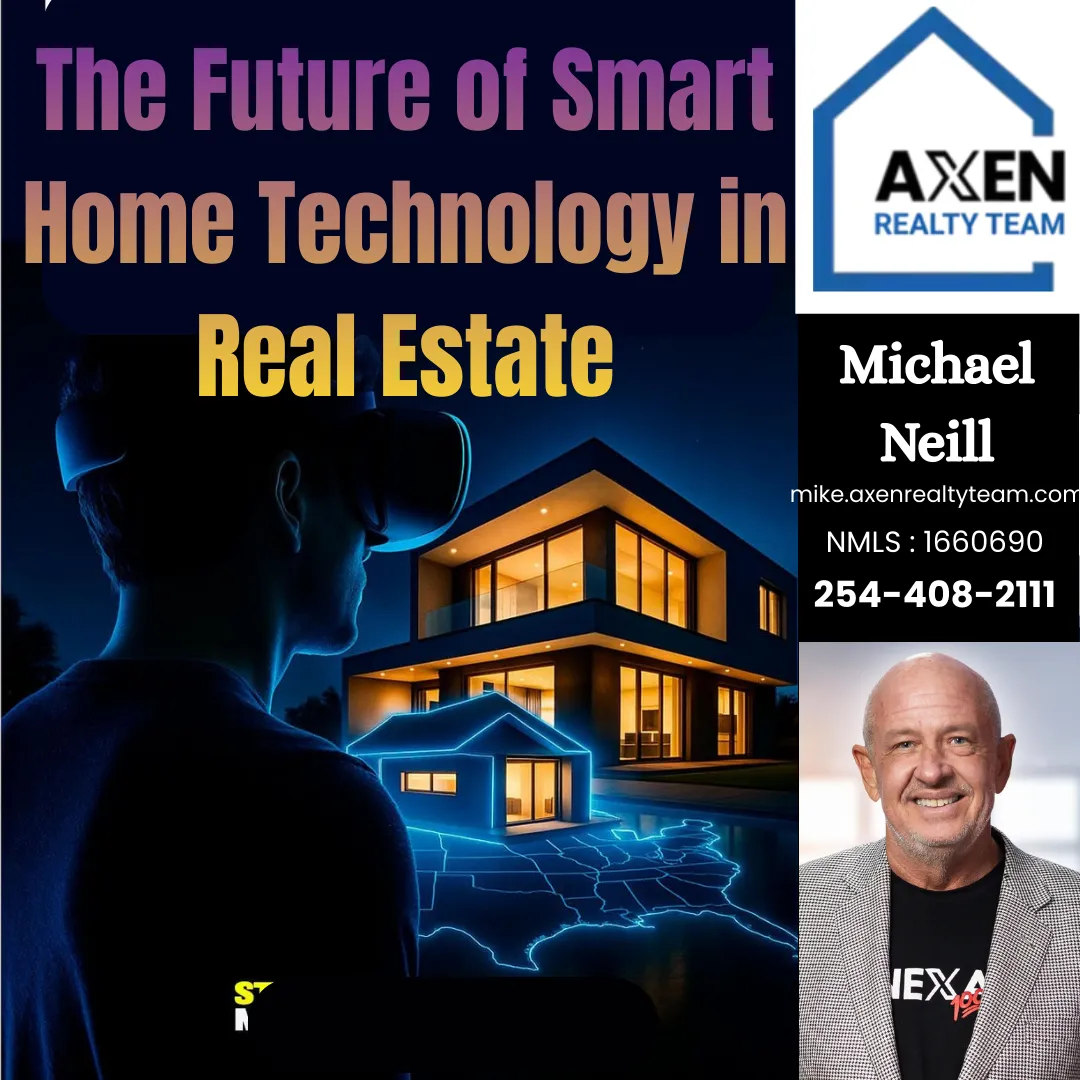
The Future of Smart Home Technology in Real Estate
The Future of Smart Home Technology in Real Estate
When I first started in real estate, “smart home” meant a programmable thermostat and maybe a security system with a keypad by the front door.
Today, smart home technology is redefining what buyers expect — and what sellers must deliver to stay competitive. From voice-controlled lighting to AI-powered security systems, homes are becoming more intelligent, more efficient, and more integrated than ever before.
As someone who works closely with buyers, sellers, investors, and mortgage professionals, I’ve seen firsthand how smart technology is influencing purchasing decisions, property values, and marketing strategies. The future isn’t coming — it’s already here.
Let’s take a deeper look at how smart home technology is shaping real estate today and where I believe it’s headed next.
The Rise of the Connected Home
Modern buyers aren’t just shopping for square footage and curb appeal anymore. They’re asking:
Does the home have smart security?
Can I control lighting from my phone?
Is the thermostat energy-efficient and app-connected?
Are there built-in automation features?
Is the home pre-wired for future upgrades?
The connected home has moved from luxury to expectation — especially among younger buyers and tech-savvy homeowners.
Convenience is no longer a bonus feature. It’s a selling point.
What Defines a Smart Home Today?
A true smart home integrates technology that allows homeowners to control systems remotely or automate them intelligently. Common features include:
Smart thermostats
Video doorbells
App-controlled security systems
Voice assistants
Automated lighting
Smart locks
Leak detection sensors
Energy monitoring systems
These tools improve efficiency, safety, and convenience — three factors that matter deeply to modern homeowners.
1. Energy Efficiency & Sustainability
Energy efficiency has become one of the most attractive features in today’s housing market.
Smart thermostats, automated lighting, and energy-monitoring systems help homeowners:
Reduce utility costs
Track consumption
Optimize heating and cooling
Minimize environmental impact
Buyers increasingly want homes that align with sustainability goals.
In many cases, energy-efficient smart upgrades can positively influence property value and marketability.
Homes that lower monthly expenses stand out.
2. Security as a Priority
Security technology has advanced dramatically.
Modern systems now offer:
Real-time camera monitoring
Smartphone alerts
Motion detection
Remote lock/unlock capabilities
Package delivery monitoring
For families and professionals alike, security isn’t just peace of mind — it’s essential.
Properties equipped with advanced security systems often attract greater interest because buyers value both protection and convenience.
3. Voice & AI Integration
Voice-controlled systems have made home automation intuitive.
Homeowners can:
Adjust lighting with a command
Lock doors remotely
Play music throughout the house
Check weather updates
Control smart appliances
As artificial intelligence continues evolving, homes will likely become more predictive — learning routines and adjusting automatically.
Imagine a home that knows when you wake up, adjusts temperature accordingly, and turns on lights gradually.
That future is closer than many realize.
4. Remote Work & Smart Infrastructure
The rise of remote work has increased demand for tech-enabled homes.
Buyers now prioritize:
Strong Wi-Fi infrastructure
Smart office lighting
Noise control systems
Integrated video conferencing setups
Whole-home networking capabilities
A smart home isn’t just about convenience — it’s about functionality.
Homes that support productivity and connectivity are in high demand.
5. Smart Appliances & Integrated Living
Kitchen and appliance technology has advanced significantly.
Modern appliances can:
Send maintenance alerts
Track grocery needs
Optimize cooking settings
Integrate with home systems
These innovations enhance everyday living and increase buyer appeal.
When buyers walk into a home that feels advanced and intuitive, it creates a memorable impression.
6. Insurance & Financial Incentives
Smart home technology isn’t just about convenience — it can also impact finances.
Some insurance providers offer discounts for homes equipped with:
Security systems
Water leak detection
Fire monitoring systems
Additionally, energy-efficient upgrades may qualify for local or federal incentives.
These financial benefits make smart upgrades even more attractive to homeowners and investors.
7. The Impact on Property Value
While not every smart feature guarantees higher resale value, many contribute to:
Increased buyer interest
Faster sales
Competitive differentiation
Stronger perceived value
In competitive markets, smart technology can be the detail that tips a buyer toward making an offer.
Homes that feel modern often feel more “future-ready.”
8. The Role of Builders & New Construction
New construction developments are increasingly integrating smart features as standard rather than optional upgrades.
Builders are now pre-wiring homes for:
Smart lighting systems
Security integration
Centralized control hubs
Electric vehicle charging stations
As this becomes the norm in new builds, resale properties may need updates to stay competitive.
Technology expectations are rising.
9. Data Privacy & Smart Home Concerns
With innovation comes responsibility.
One concern buyers often raise is data security.
Smart homes collect information — from camera feeds to usage patterns.
As professionals, we must educate clients on:
Resetting devices before resale
Removing personal account data
Securing Wi-Fi networks
Updating firmware regularly
Technology enhances convenience, but it must be handled carefully.
10. Marketing Smart Homes Effectively
From a marketing perspective, smart features should be highlighted strategically.
Instead of simply listing “smart thermostat,” we emphasize:
Estimated energy savings
App-based control convenience
Integrated automation capabilities
Security monitoring benefits
Buyers want to understand not just what’s installed — but how it improves their lifestyle.
Education increases perceived value.
11. The Next Phase of Smart Homes
Looking ahead, I anticipate several major shifts:
AI-Driven Predictive Homes
Homes that anticipate homeowner needs based on patterns.
Health Monitoring Integration
Air quality sensors, wellness tracking, and climate optimization.
Smart Grid Integration
Homes interacting directly with energy providers to optimize consumption.
Electric Vehicle Infrastructure
Built-in EV charging stations becoming standard.
Advanced Home Automation Ecosystems
Entire homes controlled through centralized dashboards.
The intersection of real estate and technology will only deepen.
What This Means for Buyers
If you’re buying, consider:
Are smart features already installed?
Is the home easily upgradeable?
Does the wiring support expansion?
Are systems compatible with common platforms?
Technology adds convenience — but integration matters.
Future-ready homes offer long-term benefits.
What This Means for Sellers
If you’re selling, strategic smart upgrades may:
Increase listing appeal
Differentiate your property
Attract tech-savvy buyers
Support competitive pricing
However, upgrades should be thoughtful — not excessive.
Focus on features buyers truly value.
Balancing Innovation with Simplicity
While smart technology is powerful, overcomplication can overwhelm buyers.
The best smart homes are intuitive, not confusing.
Simple, integrated systems create stronger impressions than overly complex setups.
The goal is convenience, not complication.
Final Thoughts
Smart home technology is no longer futuristic — it’s foundational.
Buyers expect connectivity. Sellers must stay competitive. Investors see long-term potential.
The homes of tomorrow will be:
More efficient
More secure
More connected
More sustainable
More adaptive
Technology is reshaping how we live — and how we buy and sell real estate.
If you’re considering buying or selling a home with smart technology features, or if you’d like to understand how these innovations may impact your property value, I’d love to connect.
Visit:
👉 https://michael.axenrealtyteam.com
Or book an appointment directly here:
👉 https://michael.axenrealtyteam.com/book-an-appointment
Let’s navigate the future of real estate — intelligently.
#SmartHomes, #RealEstateInnovation, #HomeTechnology, #FutureOfRealEstate, #ConnectedLiving, #PropTech, #ModernHomes
